
Recent news regarding NC State’s Name, Image, and Likeness (NIL) agreements has sent shockwaves through the college sports landscape. According to reports, their contract states that athletes can lose 50% of their payment if confidentiality terms are leaked—even if that leak comes from the athlete’s parents, agents, or attorneys.
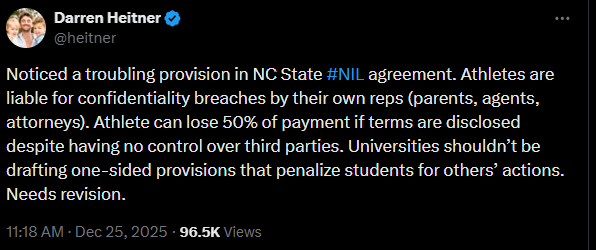 Darren Heitner X Post
NIL clauses like the one reportedly used by NC State do not just hurt athletes; they create severe financial risk, discourage participation, and raise serious legal and ethical concerns. More importantly, this situation serves as a massive red flag for the modern student-athlete: Clauses of this type are exactly why no collegiate athlete should sign a Revenue Share or Third-Party NIL contract without having it reviewed by a knowledgeable attorney.
As the $2.8 billion House v. NCAA settlement ushers in a new era of institutional revenue sharing and stringent enforcement, the stakes have never been higher. Here is why professional legal review is no longer optional for college athletes.
The “Non-Negotiable” Myth in Rev Share Contracts
With direct institutional revenue sharing becoming a reality, many universities may adopt a “take it or leave it” stance. They may claim that their school’s policy regarding Rev Share contracts means there is absolutely no negotiation of the terms.
However, even if a school states a contract cannot be altered, the athlete must still fully understand the obligations and risks they are agreeing to. A small overlooked detail today could turn into a costly mistake tomorrow.
Related Reading: California NIL Collectives in 2026: LLC vs.Tax Exempt 501(c)(3) Debate
Are there “moral turpitude” clauses that could result in immediate termination of payments for a simple social media mistake? Are there financial penalties for transferring to another program? By breaking out the specific terms of the agreement with an attorney, athletes can understand exactly what is required of them and what rights they are forfeiting. Only with careful review and subsequent explanation will the athlete be fully informed so that a sound, strategic decision can be made.
Hidden Landmines in the Fine Print
The NC State confidentiality penalty is just one example of how dense paragraphs and legal jargon can be weaponized against an athlete. Without a lawyer’s review, athletes risk signing away long-term control over their name, image, and likeness, or jeopardizing their NCAA eligibility.
Other common red flags hidden in NIL and Rev Share agreements include:
- Vague Morality Clauses: Unclear language gives schools or brands excessive control over an athlete’s personal life, allowing them to terminate the deal for anything they subjectively deem “injurious to reputation”.
- Unreasonable Indemnification: Some contracts require the athlete to cover all legal or financial consequences for potential disputes, placing a massive and unfair burden entirely on the student.
- Hidden Financial Obligations: Contracts may contain ambiguous compensation terms that lead to unexpected deductions, delayed payments, or unclear tax responsibilities.
- Perpetual Usage Rights: Brands or institutions may sneak in language granting them the right to use an athlete’s image “in perpetuity,” meaning they can profit off the athlete’s brand forever without offering additional compensation.
Why an Agent Isn’t Enough
While a sports agent or marketing representative can be highly effective at sourcing endorsement opportunities, they are not legal professionals. Agents are often motivated by commissions and may prioritize closing a deal quickly over protecting your long-term rights.
Attorneys, on the other hand, have a fiduciary duty to act strictly in the client’s best interest. An experienced sports lawyer is professionally trained to review every single detail of a contract, identifying potential pitfalls, unclear terms, and unfair clauses before the ink dries. Even the smartest athletes and parents can miss critical details when reviewing complex legal documents without professional assistance.
The Bottom Line
NIL agreements and the new wave of Rev Share documents are legally binding contracts with massive financial implications. You are essentially running a small business, and you need a legal advocate in your corner.
Before you sign any agreement—whether it is a lucrative third-party brand deal or an allegedly “standard, non-negotiable” university revenue-share contract—protect your future. Contact our sports law team to ensure you know exactly what you are signing, what you are risking, and what you are truly earning.